Mitsubishi Mini-Split Leaking Water in Burbank
Straight answer: A Mitsubishi mini-split leaking water in Burbank almost always means a clogged condensate drain or a failed drain pump, throwing a P4 or P5 code and overflowing the pan onto your wall; Burbank Mitsubishi HVAC clears the path for about $120 to $450 across 91505 Magnolia Park, so call (213) 513-5256 or book online.
Key facts
- Most common cause: clogged condensate drain or failed drain pump; codes P4 (float/sensor) and P5 (pump abnormal).
- Secondary causes: dirty filter or coil tripping freeze protection (P6), or a frozen coil from low refrigerant.
- Turning the unit off stops the drip and protects drywall and baseboards while you wait.
- Typical fix lane $120 - $450; a cracked pan or pump replacement is higher.
- Summer heat waves run the system for weeks, growing biofilm in the drain line, hence August clogs.
- Annual condensate service before peak season prevents most leaks.
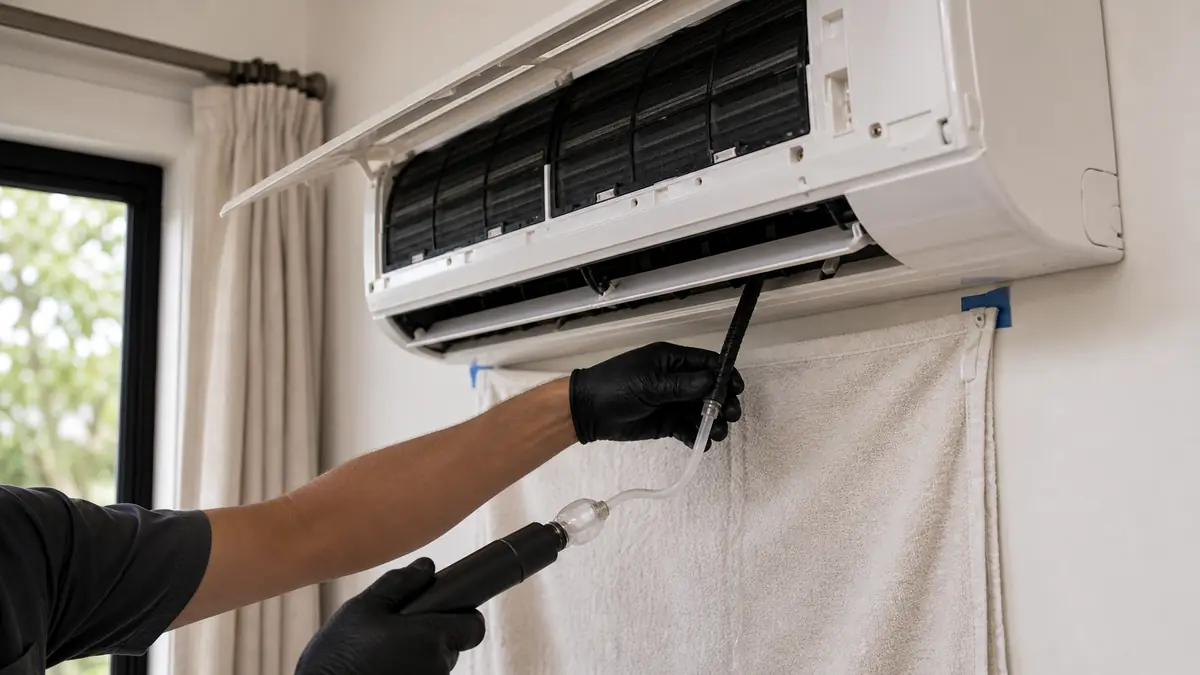
Where is the water actually coming from?
A Mitsubishi wall head cools by running room air across a cold coil, which pulls humidity out as condensate. That water collects in a pan and is supposed to leave by a gravity drain line or a small condensate pump. When the line clogs with biofilm, or the pump quits, the pan fills and spills, and gravity sends it straight down the wall the head is mounted on. It looks alarming, but it is plumbing, not refrigerant. The unit usually warns you first with a P4 (drain float or sensor) or P5 (drain pump abnormal) code.
How do I tell a drain clog from something worse?
| Symptom | Likely cause | First check / fix |
|---|---|---|
| Steady drip down the wall, P4/P5 code | Clogged drain or failed pump | Flush line, test pump ($120 - $450) |
| Ice on the coil, then water when it melts | Dirty filter (P6) or low refrigerant | Filter swap, then refrigerant check |
| Water only on humid or rainy days | Marginal drain slope or insulation gap | Re-pitch line, insulate |
| Outdoor unit puddle in heating mode | Defrost condensate, often normal | Confirm it is not an indoor leak |
What should I do right now?
Turn the unit off at the remote or breaker to stop producing condensate, then put a towel or shallow pan under the drip to protect the floor and baseboard. In a plaster-walled Magnolia Park cottage, a day of dripping can stain and swell trim, so stopping it matters. If you are comfortable, you can try a gentle flush or a wet-vac at the outdoor end of the drain line. If the water returns or you see a P5 pump code, the pump likely needs testing or replacement, which is our call to make.
How does a tech trace the leak, step by step?
We work the condensate path from the head outward. First we pull the code: a P4 points at the drain float or sensor circuit, a P5 at the drain pump itself, a P6 says the coil is freezing (usually a dirty filter or low airflow) and the "leak" is actually melt-off. Second we check the filters and the indoor coil for ice, because a frozen coil that thaws drips like a drain clog but has a completely different cause. Third we inspect the pan and the drain connection at the head for biofilm or a slipped fitting. Fourth we test the drain: on a gravity line we confirm slope and flush it; on a pumped system we trigger the pump and watch it lift water and shut off on the float. Fifth, if the pan and pump are clean but water still appears, we check the line-set insulation, because uninsulated lines sweat and drip in a humid spell and mimic a drain leak. Each branch points at a different repair, which is why reading the code first saves a wasted part.
What is safe for me to do, and what needs a tech?
The safe homeowner moves are simple: turn the unit off to stop the drip, protect the floor and trim, rinse a dirty filter, and try a gentle flush or a wet-vac on the outdoor end of the drain line for a straightforward clog. That clears a fair share of simple cases. What crosses into pro territory is anything sealed or electrical: testing or replacing a failed condensate pump, diagnosing a cracked or slipped pan, re-pitching a drain line, and above all telling a true drain clog apart from a frozen coil caused by low refrigerant. A coil freezing on low charge is a refrigerant-circuit problem (U7, P8), not a plumbing one, and chasing it as a drain clog wastes time while the real fault gets worse. If the water comes back after a flush, or you see a P5 or P6 code, that is the line where you call us.
How do I keep it from happening again?
Annual condensate service before the summer peak is the fix. We clear and treat the drain line, confirm the pump cycles, and check the slope so the August heat wave does not catch you with a clogged line mid-run. It is one item on the broader Burbank maintenance calendar, and the same visit catches the dirty filters that cause the freeze-then-drip pattern. For the full code reference behind P4, P5 and P6, see the fault-code page.
Common questions about a leaking Mitsubishi mini-split
Why is water dripping from my Mitsubishi wall head?
Nine times out of ten it is the condensate path, not refrigerant. The head pulls humidity out of the air; that water normally runs out a gravity drain or a small pump. If the line clogs with biofilm or the pump fails, the pan overflows and drips down your wall. Codes P4 and P5 point right at it.
Is the leaking water dangerous to my house?
It is not hazardous like a gas leak, but it will stain drywall, swell baseboards and grow mold if it runs for days, which matters in a plaster-walled Burbank cottage. Turn the unit off to stop the drip and get the drain cleared before the water finds your floor.
Can I clear the drain myself?
Sometimes. A gentle flush or a wet-vac on the outdoor end of the drain line can clear a simple clog. What homeowners cannot safely do is diagnose a failed condensate pump, a cracked pan, or a freeze-up that is actually low refrigerant masquerading as a leak. If it returns, call us.
Why do these clogs happen more in summer here?
Because the system runs for weeks straight through a Climate Zone 9 heat wave, producing condensate the whole time, and warm, damp drain lines grow biofilm fast. A drain that was fine in spring clogs in August. Annual condensate service before peak season prevents most of it.
Related: fault codes P4/P5/P6, maintenance calendar, and the floor-console page for low-mounted units.