Mitsubishi P6 Code in Burbank: Freeze and Overheat Protection
Straight answer: A Mitsubishi P6 code in Burbank, CA (ZIP 91505) means the coil hit freeze or overheat protection and the system shut down, usually from low airflow on a dirty filter or coil, or low refrigerant; Burbank Mitsubishi HVAC measures the cause from about $79, so call (213) 513-5256 or book online and we restore cooling.
Key facts
- P6 = freezing or overheating protection trip read by the indoor pipe thermistor.
- Most common cause: low airflow from a dirty filter or fouled indoor coil starving the coil.
- Second cause: low refrigerant, often a slow flare-joint leak on a ductless line set.
- Affected parts: indoor filter and coil, blower, refrigerant charge, pipe thermistor.
- Cost lane: cleaning within a $79 to $200 visit; a refrigerant or coil issue $225 to $1,500.
- Repeated resets on low charge can ice the coil solid and stress the compressor.
What does a P6 code mean on a Mitsubishi mini-split?
P6 is a protection code, not a component-failure code. A thermistor clamped to the indoor coil pipe watches its temperature, and when that reading drops into the freeze range or climbs into the overheat range, the control stops the system before the coil ices into a block or runs hot enough to cause damage. In cooling, the trip you almost always see is the freeze side. A healthy coil stays cold but above freezing because warm room air is constantly blowing across it. Take that airflow away, or take away the heat the refrigerant is supposed to absorb, and the coil surface plunges below 32 F, frost forms, and P6 fires. So the code is really a symptom of one of two upstream problems: not enough air moving across the coil, or not enough refrigerant in the circuit to carry the heat. The thermistor is just the messenger. That is why a P6 almost never means "replace the sensor"; the sensor is usually reading the truth, and our job is to find why the coil went cold.
Why does Burbank's climate trigger P6 so often?
Burbank's southeastern San Fernando Valley floor is Title-24 Climate Zone 9, a known SFV heat pocket, and that microclimate drives the airflow side of P6. Through a summer heat stretch the system runs nearly continuously, which means a filter that was merely dusty in June is matted by August, and a matted filter is the fastest route to a frozen coil. The dry valley air also carries fine grit and, in the leafier Rancho Equestrian District and Burbank Hills, cottonwood and sycamore fluff that loads return-side filters and the coil face. The housing stock adds its own twist. Much of Burbank's ductless was retrofit into 1920s to 1940s Spanish and Tudor cottages and California bungalows that never had ducts, so heads sometimes sit in tight, low-return spots where airflow is already marginal; lose a little more to a dirty filter and the coil tips into a freeze. On the refrigerant side, ductless systems join indoor and outdoor units with flare connections, and flares are the common slow-leak point. A charge that bleeds down a few percent over a couple of seasons will not stop the system outright but will let the coil run cold enough to trip P6 on the hottest afternoons, exactly when you need it most.
How do you diagnose a P6, step by step?
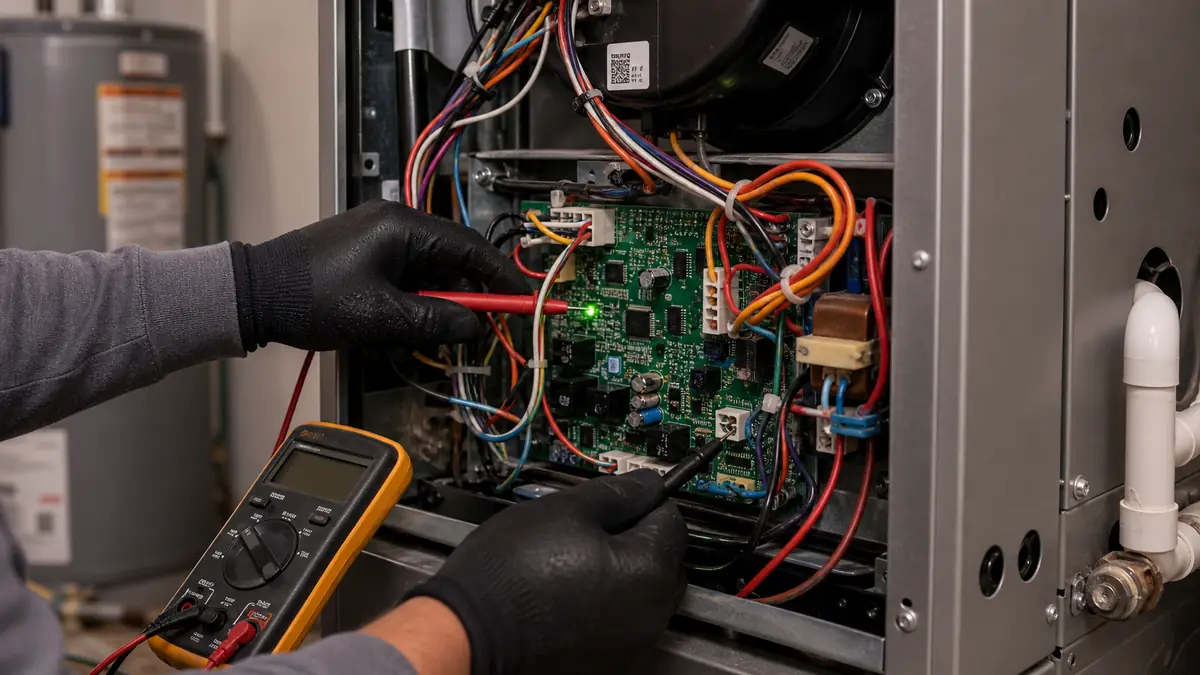
We separate the airflow cause from the refrigerant cause with measurements, because they look identical from the couch but need opposite fixes. First we read the code and the live data on the kumo app or wired controller, including the pipe thermistor temperature, so we can see how cold the coil actually got. Second we inspect the obvious airflow killers: the filter, the blower wheel, and the indoor coil face, and we confirm there is no ice still on the coil from the trip, because a frozen coil has to thaw before any reading means anything. Third, with a clean airflow path, we put gauges on the system and measure suction pressure, superheat and subcooling; a low suction pressure with high superheat is the fingerprint of an undercharged or leaking system, while normal pressures with a starved coil point back at airflow or the blower. Fourth, if the numbers say low charge, we leak-search the flare joints and the line set with an electronic detector or nitrogen and bubbles, because recharging a leaking system just buys a few weeks. Fifth, we verify the pipe thermistor itself against a known temperature only after airflow and charge check out, since a genuinely failed sensor is the rare cause, not the first guess. Each branch ends at a different repair, which is exactly why we measure before we touch anything.
What can I safely check, and when should I stop?
The safe homeowner checks are the airflow basics, and they fix a real share of P6 calls. Turn the head off and let any ice on the coil thaw completely before you do anything else; running it iced just digs the hole deeper. Pull the filters and rinse or replace them, since a clogged filter is the single most common cause. Make sure return airflow is not blocked by furniture, a curtain, or a closed-off room. Once the coil is thawed and the filter is clean, restart and watch: if P6 stays away, you found it. Where you should stop is anything involving refrigerant or the sealed system. You cannot safely measure charge, leak-search a flare joint, or add refrigerant without gauges, training, and EPA certification, and topping off a leaking system is both illegal to do casually and a waste of money. If P6 returns with a clean filter and a thawed coil, that pattern is your signal to stop resetting and call, because the next suspect is low charge, and repeatedly icing a coil on low refrigerant stresses the compressor every cycle.
What does a P6 repair cost in Burbank, and how urgent is it?
Cost follows the cause. If the diagnosis lands on airflow, a filter swap and a coil cleaning usually sit inside a 79 to 200 dollar diagnostic visit, and you are back to cooling the same day. If the cause is low refrigerant from a flare-joint leak, the repair and recharge runs about 225 to 1,500 dollars, and the spread is real: a single accessible flare is quick, while a buried line set leak or a system that holds a lot of refrigerant takes more time and more refrigerant. A failed pipe thermistor, the rare case, is a modest part. On urgency, a P6 is not a safety emergency, but it is more time-sensitive than people think when the cause is refrigerant. An airflow trip can wait a few days as long as you are not forcing the iced unit to run. A refrigerant-driven P6 is worth prompt service in a Zone 9 summer, both because you lose cooling on the worst days and because every freeze-and-thaw cycle on low charge is hard on the compressor, and a compressor is the expensive part of the whole system. We carry filters and common parts and can leak-search on the spot, so most 91501 through 91505 P6 calls get a clear answer in one visit. For the full family of codes around P6, see the fault-code reference, and the P5 drain-pump page covers the other common indoor protection trip.
How do I keep P6 from coming back?
Two habits prevent most repeat trips. The first is filter discipline: in a Burbank summer, check the filters monthly and clean or replace them before they mat, because a clean filter is the cheapest insurance against a frozen coil. The second is an annual professional service before peak season, where we clean the indoor coil, verify the blower is moving its rated air, and confirm the refrigerant charge and superheat are on spec so a slow flare leak gets caught before it tips the coil into a freeze. Both sit on the broader Burbank maintenance calendar. If you would rather have a tech handle the diagnosis and any coil or refrigerant work in one trip, our AC repair service covers it. Catching a low charge in spring is a far smaller bill than replacing a compressor that spent a summer freezing every afternoon.
Common questions about the Mitsubishi P6 code
What is a Mitsubishi P6 code?
P6 is the coil freeze and overheat protection trip. A pipe thermistor on the indoor coil read a temperature outside the safe window, so the control stopped the compressor to keep the coil from icing solid or running too hot. It is a protective shutdown, almost always traced to airflow or refrigerant, not a dead board.
Why does my Mitsubishi keep tripping P6 in summer?
Because summer is when airflow problems bite. The system runs all day through a Climate Zone 9 heat stretch, a dirty filter or fouled coil starves the airflow the coil needs, the coil temperature dives, and P6 trips. Swap the filter, let the coil thaw, and if it returns the next likely cause is low refrigerant.
Can I clear a P6 myself?
Often, partly. Turn the head off, replace or rinse the filter, and let the iced coil fully thaw, which can take an hour or two. If it was a clogged filter, P6 may not return. If it trips again with a clean filter and clear airflow, stop resetting it; that pattern points at low refrigerant or a coil issue we need to measure.
What does a P6 fix cost in Burbank?
If it is airflow, a filter and coil cleaning usually lands inside a 79 to 200 dollar diagnostic visit. If the cause is low refrigerant from a flare-joint leak, the leak repair and recharge runs about 225 to 1,500 dollars depending on access and how much refrigerant the system holds.
Related: all Mitsubishi fault codes, P5 drain pump code, and the mini-split leaking water page.