A Mitsubishi Buying Guide for Burbank Homes
Straight answer: Match the Mitsubishi system to the Burbank house: ductless MSZ heads ($3,500 to $8,000 single-zone) for pre-war cottages with no duct room, ducted SVZ/MVZ inverters for Burbank Hills ranches, all sized by Manual J; Burbank Mitsubishi HVAC serves 91505 with the honest 2026 rebate picture, so call (213) 513-5256 or book online.
Key facts
- DOE Southwest floors (the strictest for cooling): split AC 14.3 SEER2 / 11.7 EER2 below 45k BTU, 13.8 SEER2 at 45k BTU and up; split heat pump 14.3 SEER2 with 7.5 HSPF2.
- Mitsubishi tiers: MSZ-WR/HM value, MSZ-FS deluxe (3D i-see), MSZ-FX H2i plus (up to ~35 SEER2 small sizes).
- The federal 25C credit ended 12/31/2025, so a 2026 Burbank install claims no federal credit.
- State and utility money (LADWP, reported up to ~$2,500/ton tiered; SCE ~$1,000/system; TECH Clean California) runs in rounds; confirm the live amount before counting on it.
- Under Title-24 in Zone 9, expect charge and airflow verification, plus HERS-verified duct sealing whenever ducts are altered.
- Every system sized by Manual J; the local trap is oversizing, not undersizing.
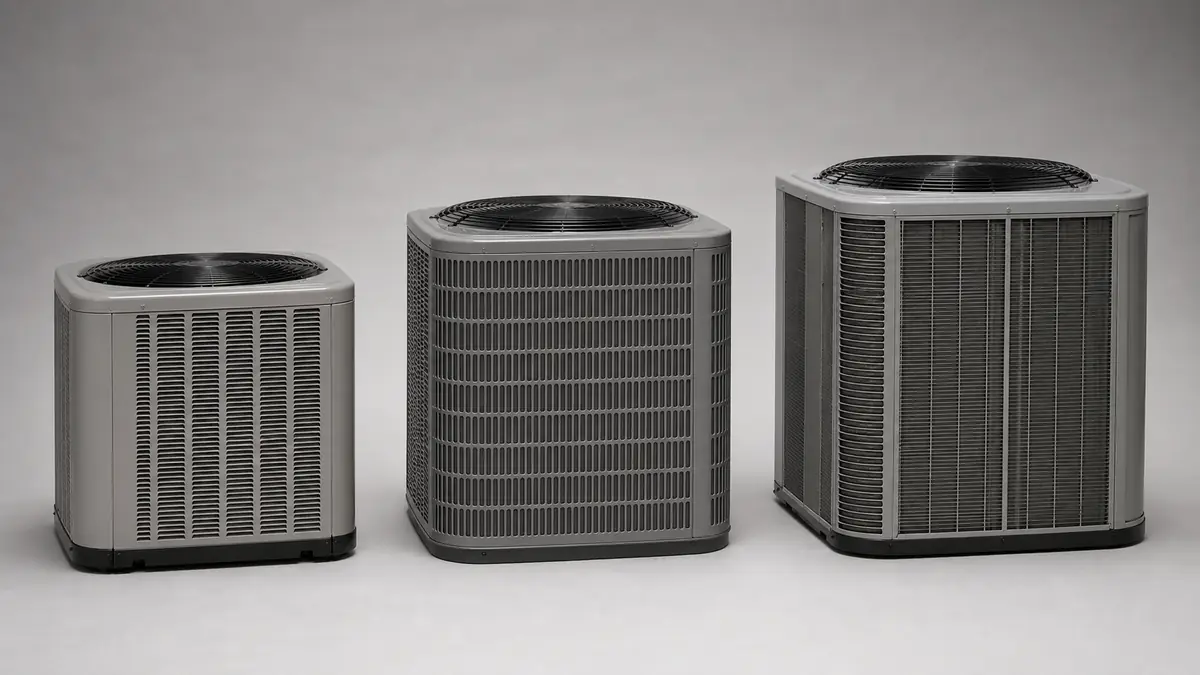
How do I match a Mitsubishi system to my Burbank house?
Start with the house, not the catalog. Burbank's housing splits into a few clear types, and each points to a different Mitsubishi path. A small 1920s-1940s Magnolia Park or Chandler Park cottage with no room for ductwork is a ductless story: one or two MSZ wall or MFZ-KJ floor heads on a compact condenser. A larger Burbank Hills or Rancho Equestrian District ranch that already has registers can keep them and run a concealed SVZ or MVZ ducted inverter. A Media District condo usually just needs a single-zone swap. Buying off the square-footage chart is where it goes wrong; run a Manual J load calculation instead and it weighs your insulation, your glass and the Climate Zone 9 design temperature, so the equipment answers the real heat load rather than a rule of thumb.
Which Mitsubishi tier is worth the money here?
The line you pick is mostly a question of how much you cool and how much you care about the bill. Because Burbank's cooling season is so long, a higher-SEER2 head pays back faster than it would in a mild coastal town, but there is a point of diminishing returns on a rarely-used room.
| Tier | Example models | Best for |
|---|---|---|
| Value | MSZ-WR / MUZ-WR (~18 SEER2), MSZ-HM | Budget retrofit, secondary rooms |
| Deluxe | MSZ-FS + MUZ-FS (3D i-see, high SEER2) | Main living areas, primary bedroom |
| Premium cold-climate | MSZ-FX / MUZ-FX..NLHZ (H2i plus, ~35 SEER2) | Lowest cooling bill, gas-to-electric |
| Multi-zone | MXZ-SM SMART MULTI (2-8 heads) | Whole-home cottage or ranch |
| Ducted | SVZ-KP / MVZ-A air handlers | Keep registers, hide equipment |
The Hyper-Heat page covers the premium condensers, and the floor-console page covers the period-room option.
What do SEER2 and Title-24 require in Burbank?
Two layers of rules land on a Burbank job. The first is the federal DOE efficiency floor, written under the SEER2 test method that took hold on January 1, 2023; California falls in the Southwest region, the toughest of the three for cooling. Below 45,000 BTU a split-system central AC has to reach 14.3 SEER2 / 11.7 EER2, a larger 45,000-BTU-and-up unit has to reach 13.8 SEER2, and a split air-source heat pump has to clear 14.3 SEER2 together with 7.5 HSPF2. A Mitsubishi inverter clears all of that without strain. The second layer is California's own Title 24, Part 6 energy code, which governs how the system goes in. Here in Climate Zone 9 that generally means verifying refrigerant charge and airflow on new and replacement split systems, and pairing any duct alteration with HERS field verification. Check the requirement that fits your equipment class and code cycle (2022 versus 2025) at the time you buy, since each revision leans harder toward a heat-pump-first baseline.
| Equipment | Southwest minimum | Typical Mitsubishi |
|---|---|---|
| Central AC (under 45k BTU) | 14.3 SEER2 / 11.7 EER2 | Inverter ductless well above minimum |
| Air-source heat pump | 14.3 SEER2 / 7.5 HSPF2 | H2i plus heads reach ~35 SEER2 small sizes |
What is the honest rebate picture for 2026?
Hold every incentive at arm's length until you have confirmed it, because the landscape turned over hard when 2026 began. The federal piece, Section 25C, the Energy Efficient Home Improvement Credit, used to return 30 percent of the project up to 2,000 dollars on a heat pump; it was repealed as of December 31, 2025. That means only gear purchased and installed on or before that date can be claimed, and it goes on the 2025 return, with nothing left in 25C for a 2026 Burbank install. The state and utility side is still alive but cycles through funding rounds that open and close. LADWP's heat-pump rebate has been reported as high as roughly 2,500 dollars per ton, scaled by efficiency tier. SCE's building-electrification rebate has been reported near 1,000 dollars for a qualifying heat-pump HVAC system. TECH Clean California's market-rate incentive has been reported in the 1,000-to-1,500-dollar band, though single-family and HEEHRA funds were reported fully reserved statewide early in 2026, waitlist only. SoCalGas carries furnace and smart-thermostat rebates that reset each program year. Before you sign anything, we sit down and read the live amounts and eligibility on the official LADWP, SCE, SoCalGas and TECH pages, and we will not name a number we cannot stand behind. Note too that the BayREN and 3C-REN programs do not reach Los Angeles County, so they are off the table for a Burbank home.
| Program | Reported amount | Status caveat |
|---|---|---|
| Federal 25C credit | Was 30% up to $2,000 | Expired 12/31/2025; none for 2026 |
| LADWP heat pump | Up to ~$2,500/ton, tiered | Verify per-ton amount and effective date |
| SCE electrification | ~$1,000/system | Verify amount and eligibility |
| TECH Clean California | ~$1,000-$1,500 market-rate | Reported reserved/waitlist early 2026 |
| SoCalGas (furnace/stat) | Up to ~$600 / ~$50 | Changes by program year |
Can you walk a real Burbank sizing example?
Take a typical 1,050 sq ft 1930s Magnolia Park bungalow: two bedrooms, an open living-dining area, single-pane and some replacement double-pane glass, modest attic insulation, west-facing living room glass that bakes through a Zone 9 afternoon. The square-foot rule of thumb (the old 400-600 sq ft per ton) would point at roughly 2 tons, 24,000 BTU, lumped into one box. A Manual J load calc on the actual house tells a different story: the real sensible cooling load lands closer to 18,000 to 21,000 BTU once you credit the modest footprint and debit that west glass. More to the point, that load is not in one place. The bedrooms need maybe 6,000 to 9,000 BTU combined; the living-dining open area carries the rest plus the afternoon solar gain.
So the right Mitsubishi answer is not a single 24k head, it is a two-zone system on a small MXZ-SM condenser: a 9,000 BTU MSZ head on the bedrooms (or two smaller heads if the bedrooms are far apart) and a 12,000 BTU MSZ-FS deluxe head on the living area where the 3D i-see sensor aims airflow at where people actually sit. Sized this way each head modulates down on a mild morning and ramps up only for the 95 F peak, which is exactly what keeps the rooms dry instead of clammy. Drop a 24k single-stage box on this cottage instead and it satisfies the thermostat in five minutes, shuts off before it has wrung any humidity out, and leaves you cold-and-damp while the compressor wears from short-cycling.
| Approach | What it specifies | Result on the valley floor |
|---|---|---|
| Square-foot rule of thumb | One ~24k single-stage box | Oversized, short-cycles, clammy rooms, worn compressor |
| Manual J, two-zone Mitsubishi | 9k MSZ bedrooms + 12k MSZ-FS living, MXZ-SM condenser | Modulates to the real load, dry comfort, longer compressor life |
What is the oversizing failure chain, and why does it cost more?
Buying too much tonnage to play it safe on a Burbank house does not just sting on the install invoice; it kicks off a string of problems that follow you for years. An oversized condenser cools the thermostat down so quickly that it shuts off almost at once, then restarts minutes later, looping on and off all afternoon. Those clipped cycles never give the coil time to wring moisture out of the valley air, so the rooms read cold and damp instead of comfortable, the homeowner nudges the setpoint lower to chase that clammy feeling, and the bill climbs to solve a problem the extra capacity created in the first place. Every one of those starts and stops also leans on the compressor: a single-stage box wears out early, and even a Mitsubishi inverter built to modulate runs poorly when the head badly out-muscles the room it sits in. So the unit somebody bought to feel protected ends up clammier, pricier to run and shorter-lived than a correctly sized one, which is exactly why every recommendation here begins with the load calc rather than the spec sheet.
What does the install actually cost in 2026?
So you can budget before any rebate, here are the dated SoCal install lanes. A single-zone MSZ/MUZ system runs roughly 3,500 to 8,000 dollars installed; a three-to-four-zone MXZ or MXZ-SM whole-home job runs about 9,000 to 20,000 dollars; a ducted inverter conversion lands around 6,000 to 16,000 dollars depending on duct condition. Where you fall depends on line-set length, electrical work, and whether your ducts need sealing first. The installation page details the path, and if you are weighing a new system against fixing the old one, the repair-or-replace guide runs the math.
Common questions about buying a Mitsubishi system in Burbank
Which Mitsubishi system should a small Burbank cottage buy?
For a 900 to 1,200 sq ft Magnolia Park cottage, a one or two-zone setup on a single MUZ or a small MXZ-SM condenser usually fits best, with MSZ-WR or MSZ-HM heads for value or an MSZ-FS deluxe head where you want the 3D i-see sensor in the main bedroom. The number of heads and their sizing get settled by a Manual J load calc on the actual cottage, never by a square-foot shortcut.
What SEER2 do I legally need in Burbank?
Because Burbank sits in California, your equipment answers to the DOE Southwest region, which the 2023 rules set tightest for cooling. A split-system central AC has to meet 14.3 SEER2 / 11.7 EER2 below 45,000 BTU and 13.8 SEER2 at 45,000 BTU and up, while a split heat pump has to clear 14.3 SEER2 alongside 7.5 HSPF2. A Mitsubishi inverter sails past those floors, and on this long valley cooling season the headroom above the minimum is exactly what earns its keep.
Are there still rebates on a Mitsubishi heat pump in 2026?
Maybe, but treat each one as unconfirmed until you have read the current program page. Congress ended the federal 25C credit as of December 31, 2025, which leaves a 2026 Burbank install with no federal tax credit behind it. The state and utility offers (LADWP, SCE, TECH Clean California) move through funding rounds, and several were showing as reserved or paused early in 2026, so we pull up the live amounts with you rather than quote from memory.
Should I oversize for the Burbank heat to be safe?
No, and it is the costliest reflex we see on the valley floor. Pile on extra tonnage and the unit short-cycles, never wrings the humidity out, leaves the rooms clammy, and tires the compressor ahead of schedule. Size it right and a Mitsubishi inverter throttles itself to carry a 95 F afternoon steadily, where an oversized single-stage box just hammers on and off.
Related: repair or replace, maintenance calendar, and installation.