Mitsubishi P5 Code in Burbank: Drain Pump and Condensate Fault
Straight answer: A Mitsubishi P5 code in Burbank, CA (ZIP 91505) means the indoor float sensed high condensate and shut cooling off, usually a clogged drain, a dead drain pump, or a stuck float; Burbank Mitsubishi HVAC clears it from about $79, so call (213) 513-5256 or book online and we restore the unit.
Key facts
- P5 = drain pump abnormal or high condensate level; the float tripped and cooling stopped.
- Top causes: clogged condensate line, failed drain pump, or a stuck or fouled float switch.
- Affected parts: condensate drain pan, drain pump, drain float sensor on the indoor head.
- Cost lane: drain clearing within a $79 to $200 visit; a replacement drain pump roughly $150 to $400.
- It is a water risk, not a refrigerant one; shut the head off and protect the wall while you wait.
- Magnolia Park and Toluca Lake-adjacent cottages with plaster walls stain fast, so do not let it drip.
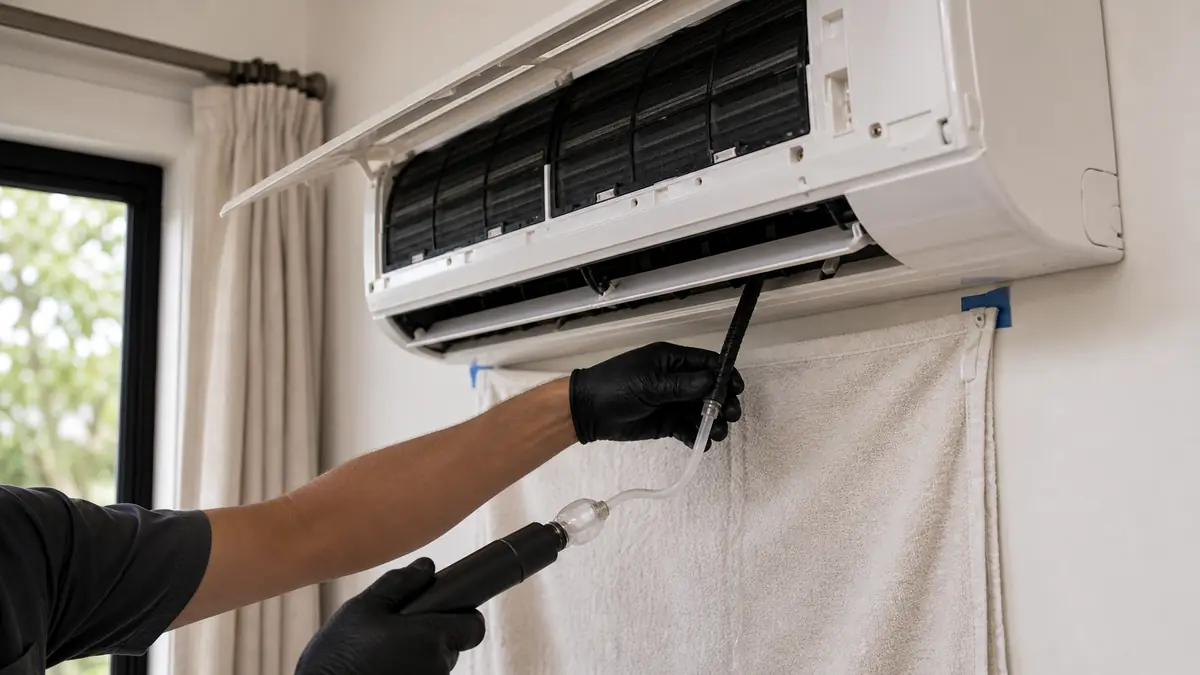
What does the P5 code mean on a Mitsubishi?
P5 sits in the P-family, the codes Mitsubishi reserves for indoor sensors and protection. Specifically it flags a drain pump abnormality or a high condensate level. Every wall head, ceiling cassette and floor console pulls humidity out of your air as it cools; that water drips into a small pan under the coil. A float switch rides in that pan. When the water level climbs past the float, the control reads it as a drain that is not keeping up and throws P5, then stops cooling so the pan cannot overflow. So the code is not telling you the air conditioner is broken. It is telling you the water is not leaving fast enough, and the unit chose to protect your ceiling over keeping you cool. The three real causes are a condensate line clogged with biofilm, a drain pump that has quit lifting water, or a float that is stuck high from sediment or a tangled wire. On a gravity-drained head there is no pump, so a P5 there points squarely at a blocked line or a stuck float.
Why does my Mitsubishi throw P5 in Burbank homes?
Burbank sits on the southeastern San Fernando Valley floor in Title-24 Climate Zone 9, the classic SFV heat pocket. During a long summer run the system can cool for weeks without a real break, and every one of those hours makes condensate. Warm, damp, slow-moving drain lines are exactly where biofilm grows, so a line that flowed fine in April clogs in August right when the unit runs hardest. The housing stock makes it worse. A lot of Burbank cooling is retrofit ductless in 1920s to 1940s Spanish and Tudor cottages and California bungalows, where the cleanest path for a drain line ran a long, low, lazy route through a plaster wall or out across a flat-pitched roof. Long runs with marginal slope drain slowly and silt up faster. In Magnolia Park and the Rancho Equestrian District we also see condensate pumps mounted in tight closets and attics that bake in the valley heat, and heat shortens a small pump's life. Add hard-water mineral scale on the float and a stuck-high float reads full even when the pan is not. None of these are exotic; they are the predictable result of running a humidity machine hard in a hot, dry valley with old plumbing paths.
How do you diagnose a P5, step by step?
We work the condensate path from the pan outward, with instruments, not guesses. First we confirm the code on the wired controller or the kumo cloud app and note whether it is a pump model or a gravity drain, because that splits the whole job. Second we open the head and look in the pan: standing water with a quiet pump points at the pump or the line; a dry pan with a tripped float points at the float or its wiring. Third, on a pump system we put a meter on the pump and trigger a cycle, watching it draw current, lift water, and shut off when the float drops; a pump that hums but moves nothing, or draws no current at all, is the fault. Fourth we test the float switch itself for continuity as we lift and lower it by hand, so we can tell a stuck float from a real high level. Fifth we check the drain line: we flush it and watch flow at the outdoor termination, and on a slow line we measure slope with a level because a flat run is its own fault. Sixth, if the pan is clean, the pump cycles and the line flows but P5 still returns, we look at the float harness and the indoor board, since a shorted sensor circuit can mimic a high level. Reading the code first, then walking the path in that order, is what keeps us from swapping a good pump.
What can I safely check before calling a pro?
A few moves are safe and genuinely helpful. Turn the head off at the remote or the breaker so it stops making water and the pan can drain down, then slide a towel or a shallow pan under it to protect the floor and trim. Pull and rinse the filters, because a starved coil can ice and then dump melt-water that aggravates the same pan. If you can reach the outdoor end of the condensate line, a gentle wet-vac pull or a slow flush can clear a simple clog, and on a one-time trip the P5 may not come back after a power-cycle. What you should not do is open the head to poke at the pump, the float or the board, work in an attic or a high closet on a ladder, or keep resetting a code that returns. A P5 that comes straight back means the pan is still full or the pump is dead, and cycling past it just invites the overflow the float was trying to prevent. If the water shows on the wall, or the code repeats, that is the line where you stop and call.
What does a P5 repair cost in Burbank, and when is it urgent?
The cost lanes track the cause. A clogged line that we clear and treat usually lands inside a 79 to 200 dollar diagnostic visit. A failed condensate pump runs about 150 to 400 dollars installed, depending on whether it is a small inline lift pump or an integrated cassette pump that takes more labor to reach. A cracked or slipped pan, or a drain line that has to be re-pitched and rerouted, costs more because of the time to open the head and open the wall path. On urgency: a P5 is not an emergency in the way a gas smell or a dead compressor is. The unit has already stopped, so nothing is grinding itself to failure. The real clock is water. A float catches the level, but a full pan can seep at a seam before every drop is sensed, and in a plaster-walled Magnolia Park cottage a day of seepage stains and swells trim. Treat it as same-week service, and faster if you already see drips on the wall, water spotting a ceiling below an attic-mounted head, or a P5 that keeps returning after you shut it off. We carry common pumps and floats, so most P5 calls in 91501 through 91505 close in a single visit. For the broader code map behind P5 and its drain-side cousins, the fault-code reference lays out the P, E and U families, and the water-leaking page covers the same drain path from the symptom side.
How do I keep P5 from coming back?
Annual condensate service before the summer peak is the single best prevention. We clear and treat the drain line, confirm the pump cycles cleanly and shuts off on the float, descale a mineral-fouled float, and check the line slope so the first heat wave does not catch you with a full pan mid-run. It is one line item on the broader Burbank maintenance calendar, and the same visit catches the dirty filters that cause the freeze-then-drip pattern people mistake for a drain fault. If your head is hard to reach or you simply want it handled, our AC repair service covers the diagnosis and the pump or float replacement in one trip. Keeping a drain line clean is cheap; chasing water damage in old plaster is not.
Common questions about the Mitsubishi P5 code
What does a P5 code mean on a Mitsubishi mini-split?
It means the float switch in the indoor head sensed a high condensate level and the unit shut off cooling to avoid an overflow. The drain pump either is not lifting water, the condensate line is clogged, or the float itself is stuck. The system is protecting your wall and ceiling, not failing outright.
Can I reset a Mitsubishi P5 myself?
You can power-cycle the unit at the breaker, and if a one-time slug of water tripped the float it may clear. But a P5 that returns within minutes means the pan is still full or the pump is dead, and resetting past it risks an overflow down your drywall. Clear the cause first, then reset.
How urgent is a P5 code?
Moderately. The unit has already stopped cooling, so there is no equipment damage running. The risk is water: a full pan can seep before the float catches every drop. Shut the head off, put a towel under it, and book service the same week, sooner if you see drips on the wall or ceiling.
What does it cost to fix a P5 in Burbank?
A simple drain clearing usually lands inside a 79 to 200 dollar diagnostic visit. A failed condensate pump runs roughly 150 to 400 dollars installed depending on the model. A cracked pan or a buried, re-pitched drain line costs more because of the labor to open the head and reroute the line.
Related: all Mitsubishi fault codes, mini-split leaking water, and the P6 freeze and overheat code.